

Passion for beauty can spark a career—but it’s professional training that transforms that passion into expertise.
Many aspiring makeup artists, beauticians, and cosmetologists begin their journey experimenting with makeup tutorials or practicing on friends. While this is a great starting point, the beauty industry today demHighlighterands much more than basic skills. Clients expect precision, hygiene, advanced techniques, and professional results—and that’s where structured training becomes essential.
In this blog, we’ll explore why professional training is not just helpful but critical for building a successful, long-term career in the beauty industry.
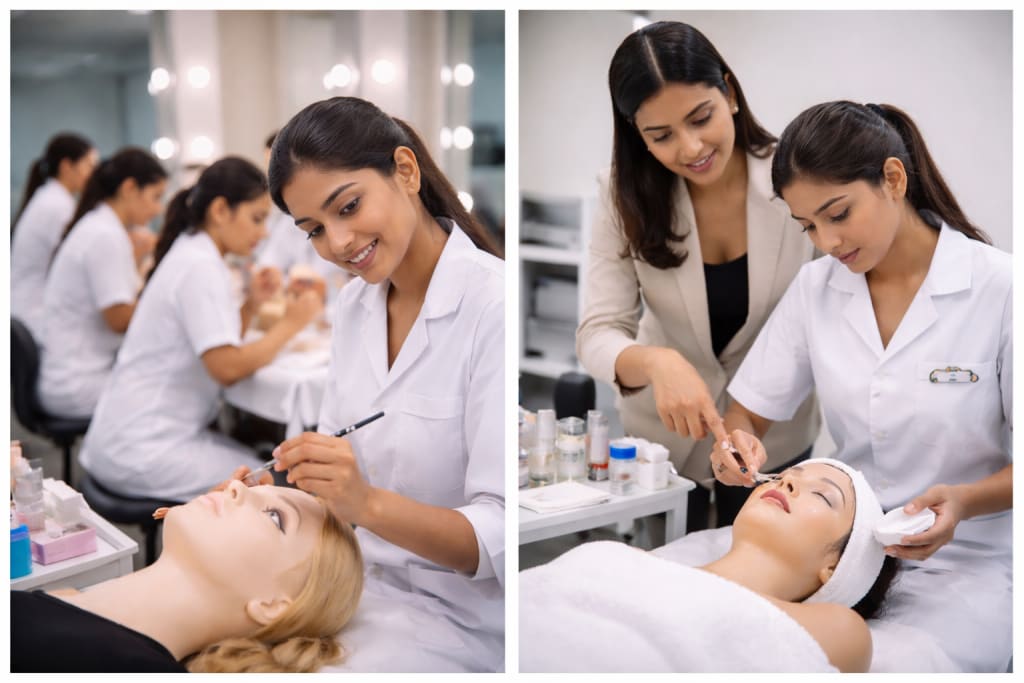
The Growing Demand for Skilled Beauty Professionals
The beauty and wellness industry is expanding rapidly in India and globally. However, one of the biggest challenges the industry faces is a shortage of skilled professionals.
According to industry insights, the Indian beauty sector requires millions of trained professionals, yet there is still a limited pool of properly trained talent.
This gap creates a major opportunity—but only for those who are properly trained.
Professional education ensures that you are not just another beginner but a job-ready, skilled professional who can meet industry standards.
Turning Passion into a Profession
Loving makeup or skincare is not enough to build a career. Professional training helps convert interest into a structured skill set.
Training programs teach:
- Step-by-step techniques
- Product knowledge
- Skin and hair science
- Hygiene and safety standards
- Client consultation skills
According to training institutes, structured education helps individuals become disciplined, precise, and industry-ready professionals.
Without this foundation, it becomes difficult to deliver consistent and professional results.
Why Professional Training Matters in Beauty Careers
1. Builds Strong Technical Skills
Beauty is both an art and a science. While creativity plays a role, techniques must be learned correctly.
Professional courses help you master:
- Makeup application techniques
- Hair styling methods
- Skincare treatments
- Nail art and grooming
Hands-on training is especially important because beauty is a practical skill-based profession.
The more you practice under expert guidance, the more confident and skilled you become.
2. Keeps You Updated with Latest Trends
The beauty industry evolves constantly. New trends, products, and technologies emerge every year.
Professional training helps you stay updated with:
- Advanced makeup techniques
- Skincare innovations
- New tools and equipment
- Global beauty trends
Continuous learning ensures that professionals remain competitive and relevant in the industry.
Without regular training, skills can quickly become outdated.
3. Ensures Client Safety and Hygiene
Beauty treatments often involve direct contact with skin, tools, and chemicals. Poor knowledge can lead to:
- Skin damage
- Allergic reactions
- Infections
Professional training teaches:
- Proper sanitation practices
- Safe product usage
- Skin analysis techniques
- Risk prevention methods
Experts emphasize that training directly impacts client safety, comfort, and results.
This is one of the most important reasons why certification matters.
4. Improves Credibility and Trust
Clients are more likely to trust trained professionals.
Having certification from a recognized beauty academy:
- Builds credibility
- Enhances professional image
- Attracts more clients
- Increases repeat business
According to industry insights, well-trained professionals are seen as more reliable and professional by clients.
In a competitive market, trust plays a huge role in success.
5. Increases Income Potential
Professional training directly impacts earning potential.
Trained professionals can:
- Offer advanced services
- Charge higher fees
- Work with premium clients
- Expand service offerings
Studies show that upskilling and additional certifications can increase revenue and client satisfaction in salons.
Simply put—the more you learn, the more you earn.
6. Opens Multiple Career Opportunities
One of the biggest advantages of professional training is flexibility.
After completing a beauty course, you can explore:
- Makeup artist (bridal, fashion, film)
- Hair stylist
- Skincare specialist
- Nail technician
- Salon manager
- Beauty educator
- Freelance artist
- Salon owner
Professional education provides the foundation needed to explore these diverse beauty career paths.
7. Provides Hands-On Experience
Watching tutorials is not the same as real practice.
Professional training programs include:
- Live model practice
- Real client interaction
- Portfolio building
- Practical assessments
Hands-on training is considered the most important factor in developing confidence and expertise.
This real-world exposure prepares students for actual job environments.
8. Helps You Build a Professional Network
Training institutes often connect students with:
- Industry experts
- Salon owners
- Product brands
- Fellow professionals
Networking can lead to:
- Job opportunities
- Collaborations
- Client referrals
Training programs and workshops are valuable platforms for building long-term industry relationships.
9. Gives You a Competitive Advantage
The beauty industry is highly competitive. Many people enter the field, but only trained professionals stand out.
Professional training helps you:
- Deliver better results
- Work more efficiently
- Handle clients professionally
- Stay ahead of competitors
Without training, it’s difficult to maintain consistency and grow in the industry.
The Role of Continuous Learning in Beauty Careers
Professional training is not a one-time process—it’s ongoing.
Beauty professionals must continuously upgrade their skills through:
- Advanced courses
- Workshops
- Masterclasses
- Certifications
Experts highlight that continuous education is essential to long-term success in the beauty industry.
Those who keep learning grow faster and achieve better career outcomes.
Real Impact of Training on Career Growth
Let’s look at how training directly influences success:
Without Training
- Limited skills
- Low confidence
- Fewer job opportunities
- Lower income
With Professional Training
- Advanced skills
- High confidence
- Better job prospects
- Higher earnings
- Strong personal brand
This clearly shows that training is not optional—it’s essential.
Common Mistakes Without Professional Training
Many beginners try to learn beauty skills through random online content.
This often leads to:
- Incorrect techniques
- Poor hygiene practices
- Lack of consistency
- Difficulty in handling clients
Professional training helps avoid these mistakes by providing structured learning and expert guidance.
Choosing the Right Beauty Training Institute
Not all courses are the same. Choosing the right institute is crucial.
Look for:
- Certified and experienced trainers
- Hands-on practical sessions
- Updated curriculum
- Industry-recognized certification
- Placement or career support
A good institute doesn’t just teach—it prepares you for real-world success.
The Future of Beauty Careers
The beauty industry is becoming more advanced with:
- AI-based skin analysis
- Personalized beauty treatments
- Sustainable beauty products
- Advanced aesthetic procedures
Professionals who invest in training will be better prepared for these changes.
In fact, a large percentage of beauty professionals are now actively pursuing additional certifications to stay relevant.
Conclusion
Professional training is the backbone of a successful beauty career. While passion can inspire you to start, it is education, practice, and continuous learning that help you grow and succeed.
From mastering techniques to building credibility, increasing income, and ensuring client safety—training impacts every aspect of your career.
If you are serious about building a future in the beauty industry, investing in professional training is not just a smart decision—it is the most important step you can take.
FAQs
Q. Why is professional training important in beauty careers?
A. It helps build skills, ensures safety, and increases career opportunities.
Q. Can I start a beauty career without training?
A. Yes, but professional training improves skills, credibility, and income potential.
Q. Does training increase earnings in beauty careers?
A. Yes, trained professionals can charge more and offer advanced services.
Q. What skills are learned in beauty training?
A. Makeup, skincare, hair styling, hygiene, and client handling.
Q. Is practical training important in beauty courses?
A. Yes, hands-on practice builds confidence and real-world experience.